Gap analysis
We assess your current operation against the QP program you're pursuing — quality, safety, and environmental — and give you a findings list you could hand to an auditor. This is the cheapest place to learn bad news.

If an owner's bid package, an approved-contractor list, or a project spec now requires AMPP QP certification, the certificate comes down to one thing: a quality, safety, and environmental program that holds up when an AMPP auditor walks your shop and your jobsites. We build, fix, and maintain those programs.
Freer Consulting has spent 27+ years getting contractors through third-party certification audits. The person who picks up the phone is the consultant who will do the work.
QP (Qualification Procedure) certification is a program that audits and certifies coatings contractors, the company rather than individuals, against defined standards for quality, safety, health, environmental compliance, and management. It is administered by AMPP, the Association for Materials Protection and Performance, formerly known as SSPC, the Society for Protective Coatings — which is why the industry still says “SSPC QP” and specs use both names. The QP programs tell an owner that your company can prepare surfaces and apply protective coatings to spec, safely and repeatably, on the kind of work you bid.
QP certification is a company credential earned through a rigorous third-party audit. If you are weighing what it takes, the fastest way to find out is a scoping call. Or read on to find the QP program that matches the work you do.
Almost nobody wakes up wanting another audit. Contractors come to us because something upstream forced the question: an owner's approved-contractor list now requires QP1, a bridge or DOT job in reach asks for the certificate in the bid package, or a facility owner won't let an unqualified crew near a lead-coated structure without QP2.
Whatever the trigger, the certificate signals the same thing to owners: your company controls its work — surface prep, application, safety, and environmental handling — well enough that an AMPP auditor signed their name to it. On protective-coatings work, where a failed system means corrosion, re-blasting, and a shutdown, that signature moves bids.
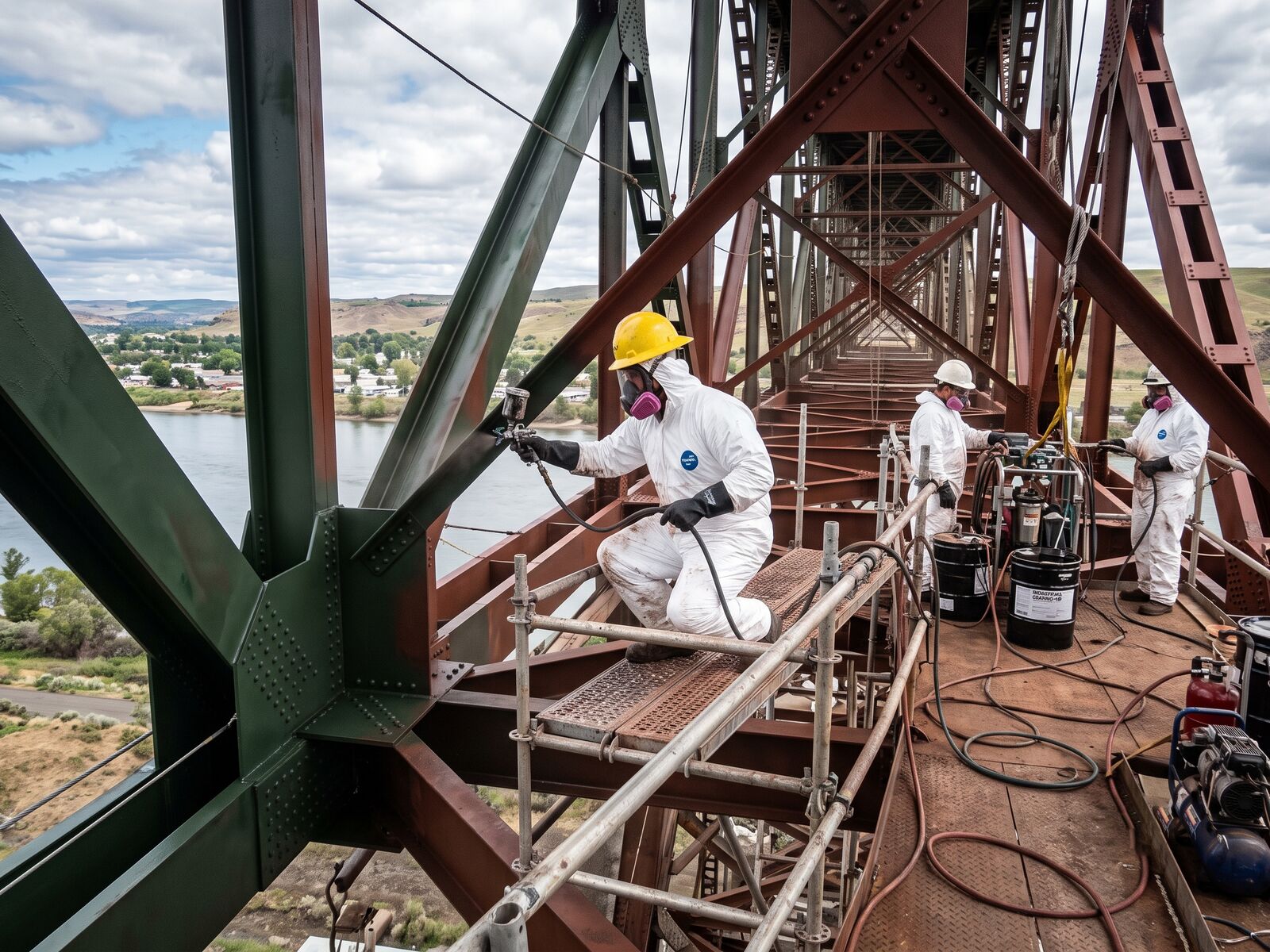
Every engagement is scoped to where you actually are. A shop with a working quality system needs a different plan than a contractor starting from a binder of tribal knowledge. Our services, in the order most clients use them:
We assess your current operation against the QP program you're pursuing — quality, safety, and environmental — and give you a findings list you could hand to an auditor. This is the cheapest place to learn bad news.
Quality manual, SOPs, and the records structure the QP programs expect, plus the safety and environmental documentation the audit covers. We write documents your crews will use, not shelf-ware that exists to be audited.
A program that lives only in documents fails its audit. We work with your team in the shop and on the jobsite until surface prep, application, and inspection run the way the manual says they do.
The QP programs require internal audits, and most contractors have nobody qualified and impartial enough to run them. We can serve as your internal audit function and keep the findings honest.
A dress rehearsal before the AMPP auditor arrives, run by consultants who have sat on both sides of the audit table. We find what they'll find, while there's still time to fix it.
Findings closeout, corrective action, and keeping the program audit-ready between cycles, so your recertification is routine instead of a fire drill.
The AMPP QP family certifies different kinds of coatings work. Most contractors need one or two; a few need several. If you're not sure which one your owner or spec is asking for, that's a five-minute phone call — and it's worth making before you build toward the wrong one.
The industry benchmark for field application of complex protective coating systems on industrial and marine structures: bridges, tanks, towers, and the like. The QP most often named in bid packages and on owners' approved-contractor lists.
Certifies contractors for the removal of hazardous coatings (lead and other regulated paint) where worker protection and environmental containment are as much the job as the coating itself.
The counterpart to QP1 for shop application of protective coatings in a fixed fabrication or coating facility: a controlled environment with its own quality and process demands.
Certifies coating and lining inspection companies, firms that provide third-party inspection services rather than apply coatings. A different audit posture, and one we prepare inspection firms for too.
Certifies contractors installing polymer coatings and surfacings on concrete, including immersion and secondary-containment service. A specialized program with its own material and application controls.
Owners and specs don't always name the QP correctly, and building toward the wrong one is expensive. Tell us what you make or install and who's asking for the certificate, and we'll tell you which program governs.
AMPP also runs specialty programs beyond these: QP 6 (thermal spray / metallizing), QP 7 (coating work on petroleum storage tanks), and QP 9 (commercial and architectural painting). We prepare contractors for those the same way — if your spec names one, bring it to the call.
Contractors sometimes assume a QP audit is about how well they paint. The QP programs examine the whole company: quality control and inspection, yes, but also safety and health programs, environmental compliance, workforce training, and management systems. An auditor who likes your coating work can still write you up for a thin safety program or missing environmental records.
That breadth is exactly why contractors bring us in. We build the program as a whole, with the same engineering and compliance bench that supports our AISC, API Q1, and ISO 9001 clients, so the parts that aren't “painting” don't sink your certification.
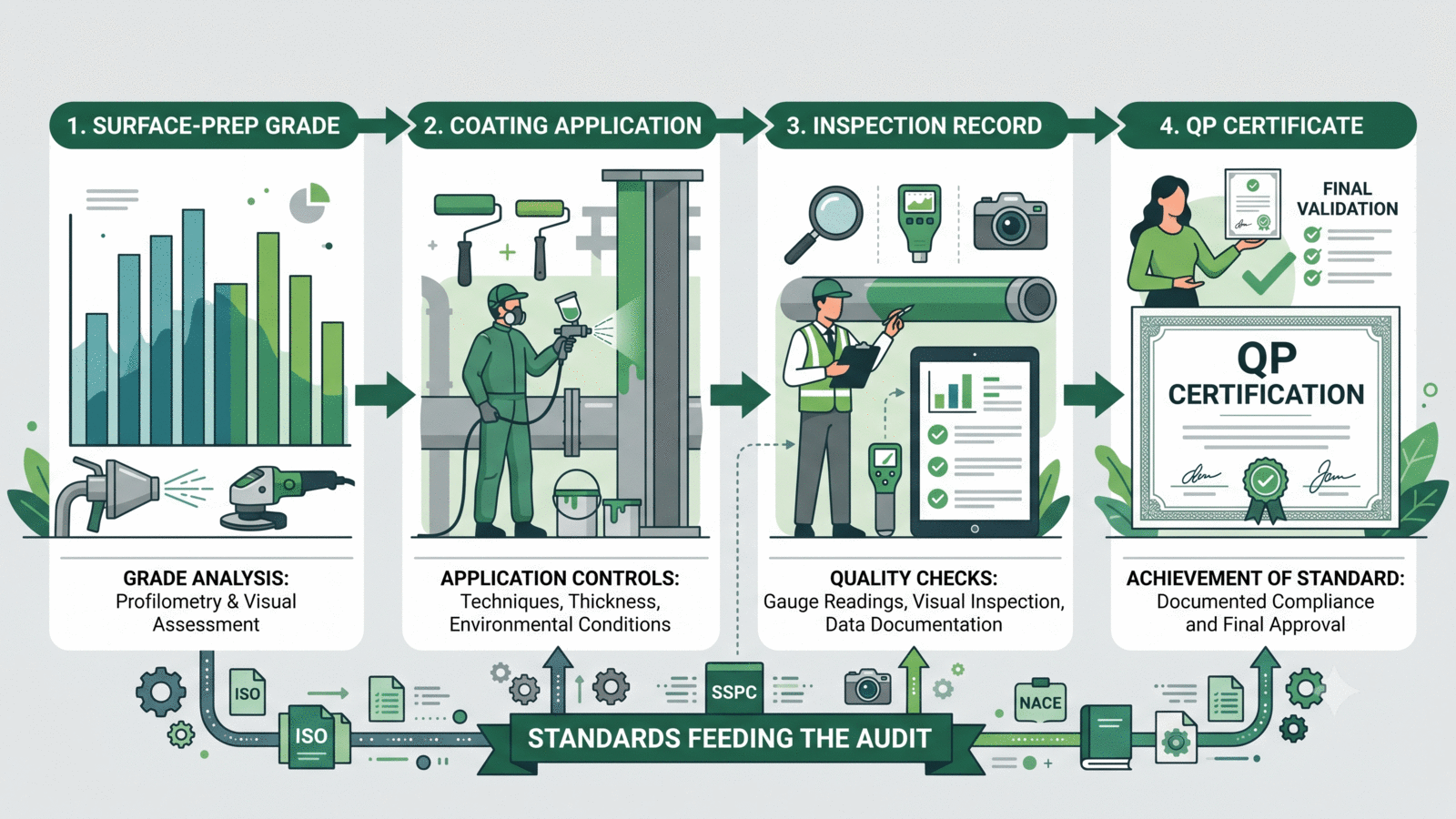
By the time a QP auditor is in your shop, it's assumed your crew can prep to SSPC-SP10 and verify film build to SSPC-PA 2. What the audit actually examines is whether your program documents prep, application, inspection, and acceptance consistently, job after job. That system is what we build with contractors, and have for 27+ years.
If you want the standards themselves (every SP grade, the ISO cross-reference, the VIS visual guides), our SSPC standards reference hub lays them out in plain English.
Every SP, AB, VIS and PA standard indexed in plain English, with the SSPC–ISO–NACE cross-reference chart.
Abrasive blast cleaning standardsSP5, SP6, SP7, SP10, SP14 and the rest of the blast ladder — the grades your QP work is prepped and inspected against.
Hand & power tool cleaning standardsSP1, SP2, SP3, SP11 and SP15 — when hand and power tool prep is specified, and what an inspector holds it to.
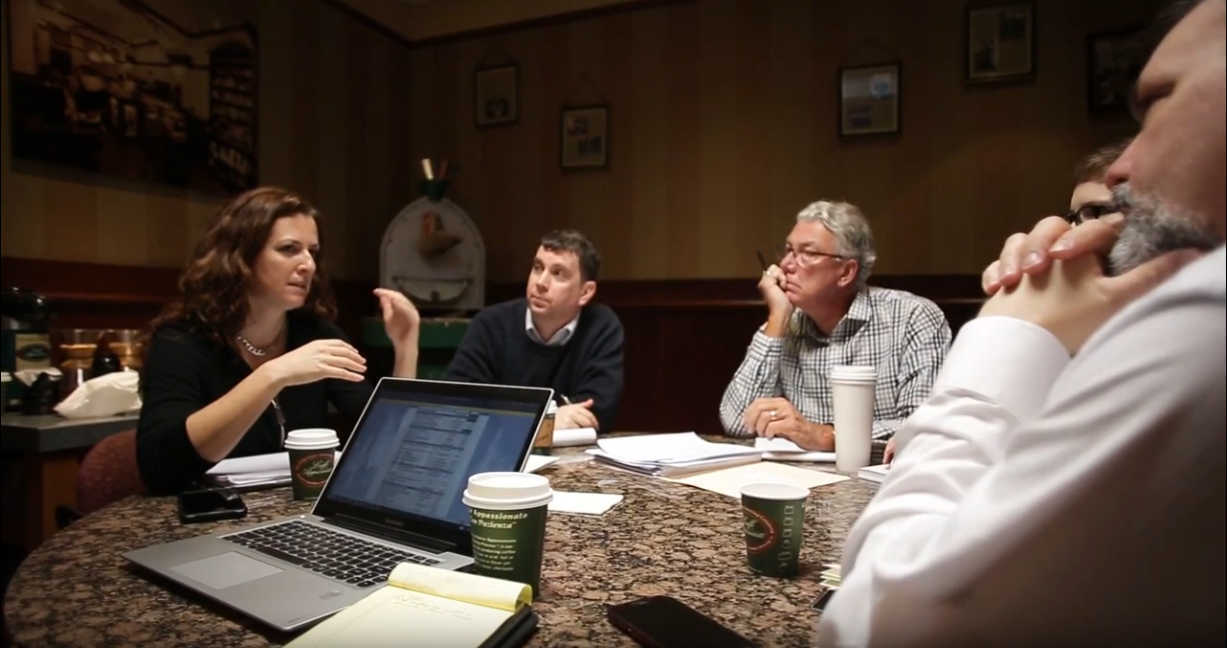
We are a small firm by design. No layers of salespeople, no junior staff learning on your invoice. The consultants who scope your project are the practitioners who deliver it, working on-site or remotely through the Global Virtual Playbook we pioneered for clients across the US and internationally.
We establish long-term, productive relationships with our clients, growing with your company and providing services as you need them. Our experience means we get it right the first time — and our standards ensure your company realizes the benefits of getting it right, again and again.
The same engineering bench that guides your QP work also supports AISC, API Q1, and ISO 9001 programs — so when your company carries more than one certification, we keep them aligned on one management system instead of running disconnected ones.
“I've worked with the Freer Team for over 6 years on our safety, quality, and environmental management system compliance and they've proven time and time again to provide consistent and comprehensive work on all fronts. They are always there when we need them.”
Not always by regulation, but increasingly by contract. Many owners (DOTs, facility owners, and prime contractors) require QP1, QP2, or QP3 in the bid package or on their approved-contractor lists. If a specific owner or spec is driving the question, bring it to the scoping call and we'll tell you exactly which program it obligates you to.
QP1 certifies field application of complex coating systems on industrial and marine structures; QP2 certifies hazardous (e.g. lead) coating removal; QP3 certifies shop application in a fixed facility. Many contractors hold more than one. If you're unsure which your work falls under, see Which QP program do you need? above or call us.
Typically three to six months, depending on how much of a working quality, safety, and environmental program you already have and which QP you're pursuing. A gap analysis at the start replaces guessing with a real timeline — and tells you whether you're three months out or twelve.
AMPP QP certifications are typically valid for three years, with an interim audit in between, after which you go through recertification. We keep clients' programs audit-ready between cycles so recertification is routine rather than a scramble.
No, and be wary of anyone who implies they can. The certification audit is performed by AMPP. We prepare you for that audit, run a mock audit so nothing surprises you, support you through it, and help close out whatever it finds.
Tell us what work you do and who's asking for the certificate. In one call, we'll give you a straight read on which program applies, where your gaps are, and how long it will take.