
AISC certification cost: what actually drives it.
If you searched for the cost of AISC certification, you have noticed nobody publishes a number. That is not coyness. The cost genuinely varies shop to shop, because the biggest component is not a fee anyone invoices: it is the distance between your current quality system and the standard.
What we can do is show you exactly what the money goes to, which costs recur, and where shops overspend. Then, if you want a real number, we will scope one for your shop. That takes one call, not a sales process.
- Every estimate we give is scoped to your shop, not a brochure range.
- 27+ years of industrial certification consulting, for companies of every size.
What AISC certification costs: the three layers.
Every certification budget, at any shop, is the sum of the same three layers. Shops that go in clear-eyed about all three avoid the classic mistake: budgeting for the first layer and getting surprised by the second.
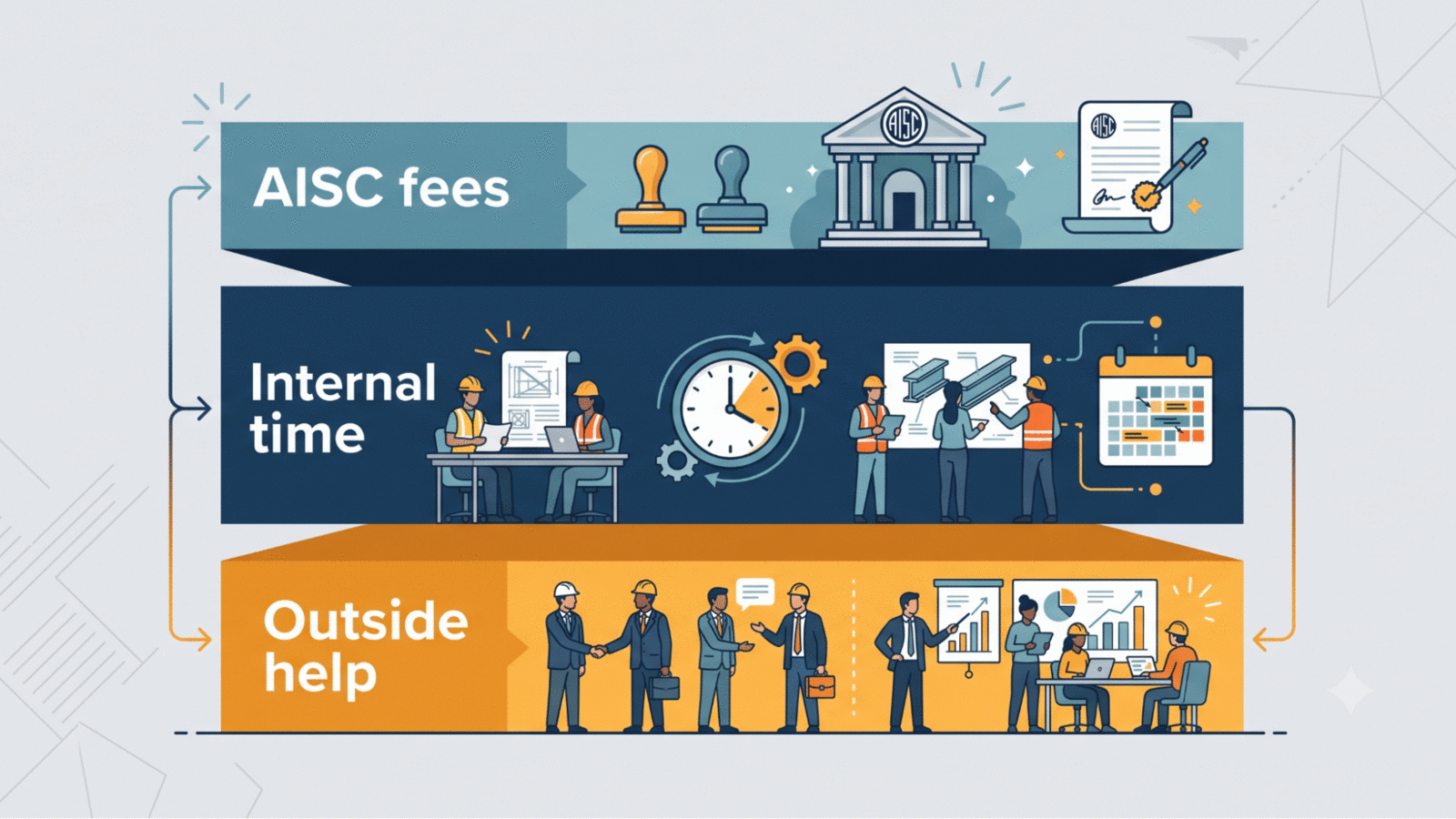
| Layer | What it covers | Who you pay |
|---|---|---|
| 1. AISC program & audit fees | Application, certification, and audit costs set by AISC | AISC |
| 2. Internal time | Building and running the quality system: procedures, training, records | Your own payroll |
| 3. Outside help | Consulting support for gap assessment, documentation, audit prep | Your consultant, if you use one |
Layer 1: AISC program and audit fees
These are the fees AISC sets, and they scale with your program category and the size of your operation. They are the most predictable part of the budget and usually not the largest.
Layer 2: the internal cost most shops underestimate
The standard requires a quality system that is documented, implemented, and producing records. Someone in your shop has to write procedures that match your floor, train the crew on them, run them long enough to generate audit evidence, and keep them current. That someone almost always has a full-time job already.
This layer is where certification efforts stall and where the real money hides — in the form of a QC manager's nights and weekends, or a project that drifts a quarter at a time. When shops tell us certification "took two years," this layer is nearly always why.
Layer 3: outside help
You can do this without a consultant; shops have. What a consultant changes is layer 2: the documentation gets written by someone who has done it dozens of times, your people stay on production, and the project holds a schedule because it is somebody's actual job. Whether that trade makes sense depends on how much of layer 2 your shop can genuinely absorb. We will tell you honestly if you do not need us; a shop with a strong existing system sometimes just needs audit prep.
One-time costs vs annual fees.
Certification is not a single purchase. Budget it as a project cost up front and an operating cost after.
| One-time (getting certified) | Recurring (staying certified) |
|---|---|
| Gap assessment | Annual AISC participation fees |
| Quality-system build-out and documentation | Recurring audits |
| Team training | Keeping documentation current as standards revise |
| Initial audit and fees | Closing findings when they happen |
The recurring side is smaller, but it is real, and pretending otherwise leads to lapsed certifications. A system designed to be maintainable by your own people, at your shop's actual size, is the difference between an operating cost and an operating burden. That is a design decision made at the start, not a discovery made at renewal.
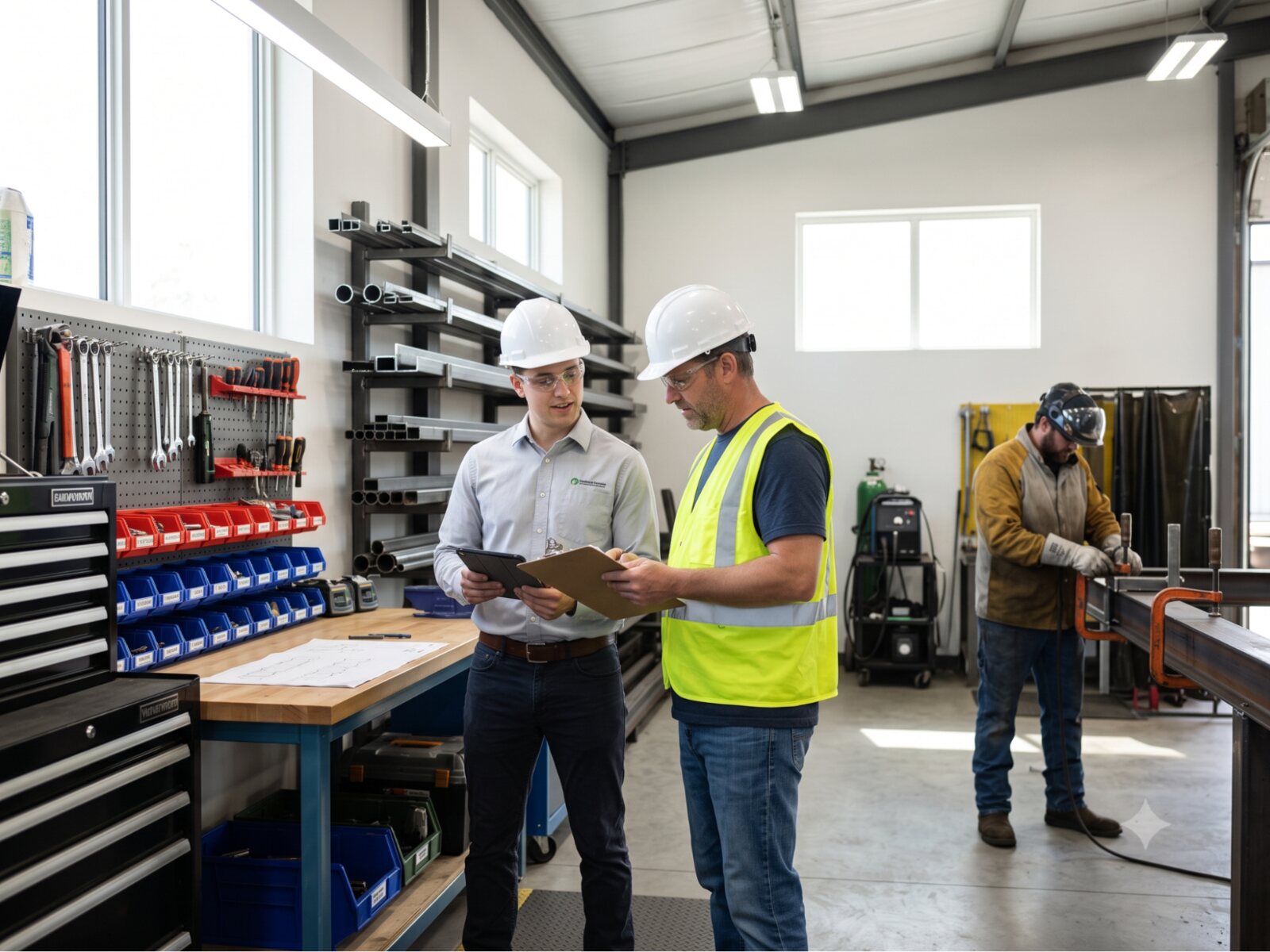
The cost of certification for a small business.
Small shops assume the math does not work for them. It usually does, for two reasons.
First, the audit scales. A 10-person shop is not held to a 200-person shop's bureaucracy; it is held to a system that matches a 10-person operation. Smaller operation, smaller system, less to build and maintain.
Second, the return is the same spec access the big shops are buying. One bridge package or public job that requires certification can carry the entire cost of getting it. For a small shop, certification is less a compliance expense than a bid-list expansion.
The honest caveat: small shops have the least slack for layer 2, the internal time. That is exactly the situation our turnkey AISC certification approach was built for.
Cost is one piece of the decision. For how we actually take shops through certification, end to end, see our AISC certification consulting services.
Contact us to get startedWhat a scoped estimate looks like.
When we scope your shop, you get specifics, not a range off a website: which program category fits the work you want, how far your current system is from the standard, which parts your team can carry and which need help, and what the timeline does to a bid date if you have one. Thirty minutes, no obligation, and you will know more about your real cost than any page on the internet can tell you — including this one.
Cost questions, answered.
How much does AISC certification cost?
There is no single flat rate, and any website quoting one is just averaging shops that have absolutely nothing in common. Your total cost is a combination of AISC fees, your internal team's time, and any outside consulting help you choose to use. The biggest variable is simply how close your current quality system is to the AISC 207 standard. A quick 30-minute scoping call gets you a realistic estimate built around your actual shop rather than a random guess.
Are there annual fees to stay AISC certified?
Yes. Staying certified involves recurring AISC fees and periodic audits, plus the ongoing work of keeping your system current. It is a modest operating cost when the system was built to be maintainable, and a headache when it was not.
What does the AISC audit cost?
Audit fees are set directly by the AISC and scale based on your specific program category and the size of your operation. However, the largest audit related expense for most shops isn't the fee itself. It is actually the internal preparation time, which happens to be the part you have the most control over.
Is certification worth the cost for a shop our size?
Run one number: the value of the bids you could not submit last year because the spec required AISC certification. For most shops that ask us, that number settles the question before we ever discuss fees. If the work you want does not require certification, we will tell you that too.
About Freer Consulting
Freer Consulting Co. has 27+ years of experience in a wide range of business consulting fields. Our well-rounded, experienced team has a proven record of meeting business needs and achieving results on-time and within budget. We work with businesses across the United States and internationally, providing both on-site and remote consultation. In our industry, Freer pioneered the Global Virtual Playbook, which allows us to provide expert remote consultation to our clients across the globe.
We establish long-term, productive relationships with our clients. We can grow with your company and provide services as you need them. Our experience means we get it right for your company the first time. Our standards ensure your company realizes the benefits of getting it right, again and again.
The same engineering bench that guides your AISC certification also supports ISO 9001, API Q1, and AMPP/SSPC programs — so when your shop carries more than one certification, we keep them aligned instead of running disconnected systems.
“I've worked with the Freer Team for over 6 years on our safety, quality, and environmental management system compliance and they've proven time and time again to provide consistent and comprehensive work on all fronts. They are always there when we need them.”
Stop guessing at the number.
One call gets you a scoped estimate for your shop — fees, internal effort, and where you can save.