Freer Consulting

SSPC · AMPP Surface Preparation Standards

SSPC standards, explained by people who get audited against them.


Every SSPC surface preparation, application, and visual standard in one place — what each one requires, where it applies, and what an inspector or AMPP QP auditor will hold your crew to.

Written by the consulting team that helps coatings contractors earn and keep AMPP QP certification. 27+ years on the contractor's side of the audit table.

  • Every SP, AB, VIS, PA and QP standard, indexed in one place.
  • Plain-English, from consultants who prep shops for AMPP QP audits.
The working language of coatings

What the SSPC standards cover (and who writes them now).

The SSPC standards are the working language of industrial coatings in North America. When a spec says the steel must be cleaned to SSPC-SP10, or the dry film thickness verified per SSPC-PA 2, those documents define exactly what “done right” means — and they are what an inspector or auditor will hold your crew to.

SSPC (the Society for Protective Coatings, originally the Steel Structures Painting Council) merged with NACE International to form AMPP, the Association for Materials Protection and Performance. The standards kept their SSPC designations, which is why specs and search habits still say “SSPC-SP6” rather than an AMPP number. Where a standard was jointly issued with NACE, both designations appear on the same document (SSPC-SP10 / NACE No. 2 is the common example).

We work with these standards from the contractor's side of the table. Freer Consulting has spent 27+ years preparing companies for third-party certification audits, including the AMPP QP programs that certify coatings contractors. This guide is the reference we wished our clients had on day one.

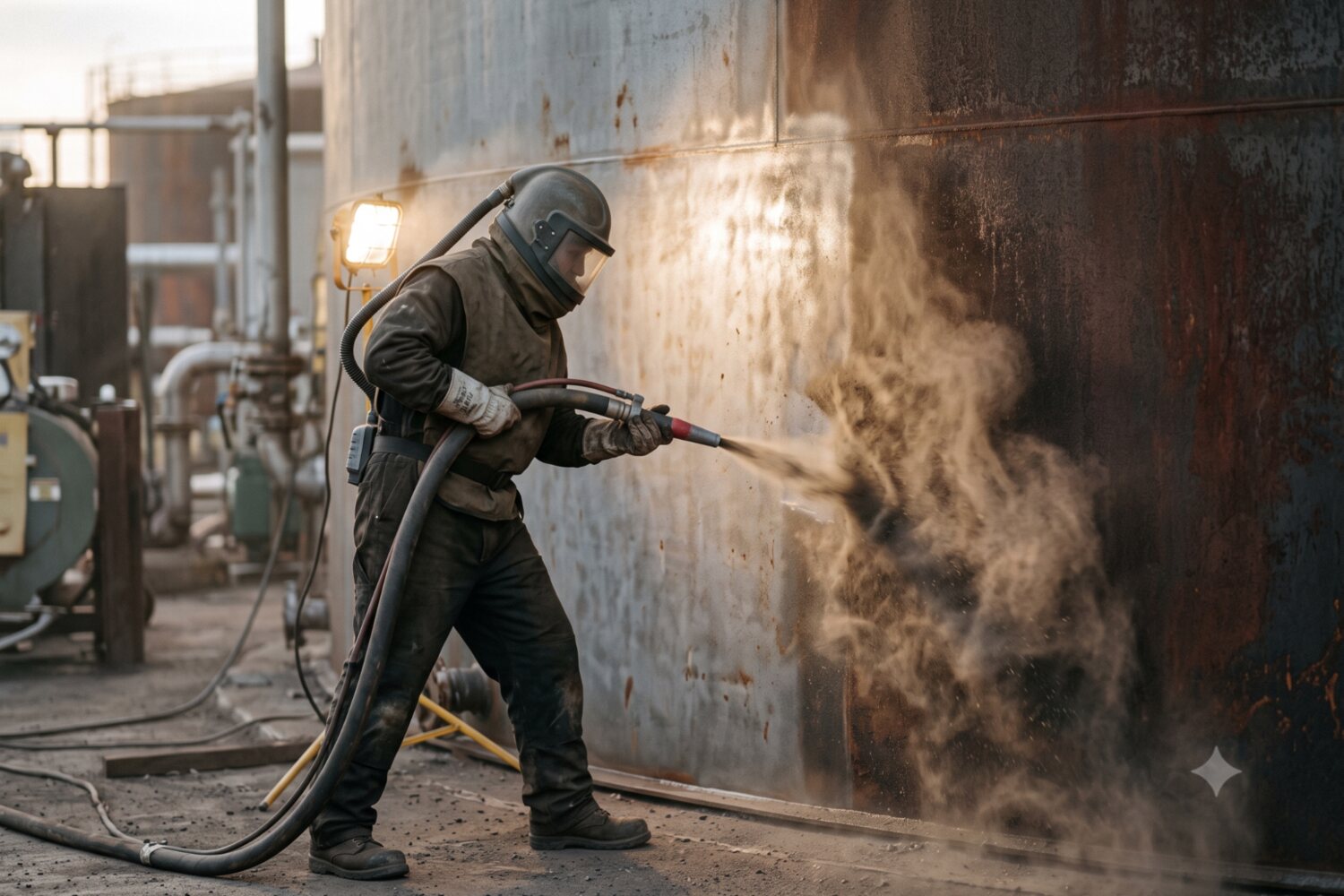
Abrasive blasting a steel tank wall — surface preparation to SSPC standards
How the standards are organized

The six families of SSPC standards.

The standards group into six families. Each one gets its own deep-dive page or post; here is the map, with a link down to the detail.

Surface preparation (SP)

Cleanliness grades for steel before coating, from solvent wipe-down to white metal blast. They split into hand & power tool cleaning (SP1, SP2, SP3, SP11, SP15) and abrasive blast cleaning (SP5–SP16). Most coating failures trace back here.

Abrasive media (AB)

AB1, AB2 and AB3 govern the abrasives themselves: mineral and slag media, recycled ferrous media cleanliness, and ferrous metallic abrasives. They live with the blast standards on the abrasive blast cleaning page.

Visual guides (VIS)

Books of reference photographs used to judge prepared surfaces by eye. SSPC VIS 1, the pictorial guide for blast-cleaned steel, is the one that settles arguments in the field.

Paint application (PA)

How coatings go on and how the work is verified — including SSPC-PA 2, the dry film thickness procedure every inspector carries. Covered in our PA standards explainer on the blog.

Guides

Advisory documents rather than pass/fail standards. The two that matter most to contractors — Guide 6 (containment) and Guide 15 (soluble salt testing) — are covered in our Guide 6 and Guide 15 explainer on the blog.

QP certification programs

QP1, QP2 and QP3 are not technical standards — they are AMPP's contractor certification programs, auditing whether your company can execute all the standards above on real work. That is what we do for a living: see our AMPP/SSPC QP certification consulting.

The fastest lookup on the page

The complete SSPC SP standards index.

Every active SP standard, what it requires in one line, and where to read more. Bookmark this table.

StandardNameOne-line scopeFull reference
SSPC-SP1Solvent CleaningRemove oil, grease and soluble contaminants; required before every other methodSP1 section
SSPC-SP2Hand Tool CleaningRemove loose rust, mill scale and paint with hand toolsSP2 section
SSPC-SP3Power Tool CleaningRemove loose material with power toolsSP3 section
SSPC-SP5White Metal Blast CleaningBlast to a uniformly clean, bare surfaceSP5 section
SSPC-SP6Commercial Blast CleaningBlast clean with limited staining permittedSP6 section
SSPC-SP7Brush-Off Blast CleaningLight blast; tightly adherent material may remainSP7 section
SSPC-SP10Near-White Metal Blast CleaningBlast clean with only slight staining permittedSP10 section
SSPC-SP11Power Tool Cleaning to Bare MetalPower tool to bare metal with a surface profileSP11 section
SSPC-SP13Surface Preparation of ConcretePrepare concrete to receive a coating or liningSP13 section
SSPC-SP14Industrial Blast CleaningBlast grade between brush-off and commercialSP14 section
SSPC-SP15Commercial Grade Power Tool CleaningPower tool grade between SP3 and SP11SP15 section
SSPC-SP16Brush-Off Blast, Coated & Non-FerrousLight blast for galvanized, stainless and non-ferrous metalsSP16 section
SSPC-SP WJ-1–WJ-4Waterjet CleaningFour waterjetting cleanliness grades (replaced SP12)Waterjetting section
Still searched, no longer current

Retired and superseded SSPC standards.

Three designations still show up in old specs and still get searched, but you should not bid or build to them without a conversation with the spec owner.

SSPC-SP4 (Flame Cleaning). Discontinued. If a legacy spec calls for SP4, flag it for clarification rather than improvising a method.

SSPC-SP8 (Pickling). Acid pickling of structural steel — still a valid standard, but rarely specified outside specialty shop work.

SSPC-SP12 (Waterjetting). Superseded by the four-grade SSPC-SP WJ-1 through WJ-4 series, issued jointly with NACE. Specs written before the change still cite SP12 with a condition suffix. Our waterjetting section maps the old callouts to the new grades.

The cross-reference chart

SSPC vs ISO 8501 vs NACE.

North American specs speak SSPC, international and marine specs speak ISO 8501-1, and older documents add NACE numbers on top. The grades describe the same physical reality, but they are not identical — and treating them as interchangeable has lost real money in real disputes.

MethodSSPCNACE (joint)ISO 8501-1Plain English
BlastSP5 White MetalNo. 1Sa 3Visually clean bare metal, no staining
BlastSP10 Near-WhiteNo. 2Sa 2½Slight staining only
BlastSP6 CommercialNo. 3Sa 2Limited staining permitted
BlastSP14 IndustrialNo. 8Sa 1–Sa 2Most contamination off, traces remain
BlastSP7 Brush-OffNo. 4Sa 1Loose material removed
Hand toolSP2 Hand Tool(none)St 2Loose material removed by hand
Power toolSP3 Power Tool(none)St 3Loose material removed by power tool
Power toolSP11 / SP15(none)no direct equiv.Bare metal with profile; exceeds St 3
Every pairing is an approximate working equivalent, not a contractual substitution.

The systems define cleanliness differently at the root: ISO 8501-1 grades a surface against photographic plates organized by the steel's initial rust grade (A through D), while the SSPC standards define grades in written text, chiefly through staining allowances expressed as a percentage of each unit area, with the VIS photographs as a supplementary guide. Most of the time they land in the same place; at the boundaries (especially pitted steel) they can genuinely disagree. The resolution is always available in advance: the spec names one governing system, and acceptance references that system's documents only. If your spec names both without precedence, raise an RFI before blasting, not after.

The “NACE No. 2” style designations date from when SSPC and NACE jointly issued the blast standards; SSPC-SP10/NACE No. 2 is one standard with two names, and the legacy designations remain on the documents post-merger. As for “SSPC 2018”: that is almost always an edition citation — either the 2018 edition of an individual standard or the 2018 compilation volume. The spec's cited edition governs the contract; where the spec is silent, confirm the intended edition with the specifier in writing.

Knowing vs proving

Knowing the standards is not the same as certifying to them.

Here is the distinction that matters commercially. Any crew can read SSPC-SP10. An AMPP QP audit asks something harder: can your company prove, with documentation, trained people, calibrated equipment, and a functioning quality system, that you hit SP10 every time, on every job — including the ones nobody inspected?

That gap between knowing and proving is where we work. Freer Consulting prepares coatings contractors for QP1, QP2, and QP3 certification: we build the quality manual, set up the documentation your auditor will ask for, train your people on what the audit actually examines, and stay with you through the audit itself. No layers of salespeople — the person who answers the phone is the consultant who does the work.

If a QP audit is somewhere on your horizon (most owners start 6 to 12 months out), talk to us about where your shop stands.

FAQ

SSPC standards, answered.

What does SSPC stand for?

SSPC stands for the Society for Protective Coatings. The organization was founded as the Steel Structures Painting Council, which is why older documents carry that name. SSPC merged with NACE International to form AMPP, the Association for Materials Protection and Performance.

Are SSPC standards now AMPP standards?

Yes — AMPP now administers and publishes them, but the standards kept their SSPC designations. A spec citing SSPC-SP6 and a document published by AMPP as SSPC-SP6 are the same standard. Joint legacy standards carry both SSPC and NACE numbers.

Where can I get the official SSPC standards PDFs?

Official standards are purchased from the AMPP store; they are copyrighted documents and the full text is not free. This guide summarizes what each standard requires and how it is used so you can identify the right one before you buy it, but it does not replace the standard on a contract job.

What is the difference between an SSPC standard and an SSPC guide?

A standard (SP, PA, AB, VIS) sets requirements you can be held to: a defined cleanliness grade, a measurement procedure, an acceptance criterion. A guide (like Guide 6 or Guide 15) is advisory; it describes recognized methods without setting pass/fail requirements unless a project spec elevates it.

Which SSPC standards do QP auditors actually check?

All of the ones your work scope touches. In practice, QP audits dig hardest into surface-prep verification (the SP grades and VIS comparisons), dry film thickness records per SSPC-PA 2, and, for QP2 contractors, containment per Guide 6. Each child page on this hub has a “what auditors look for” note for exactly this reason.

About Freer Consulting


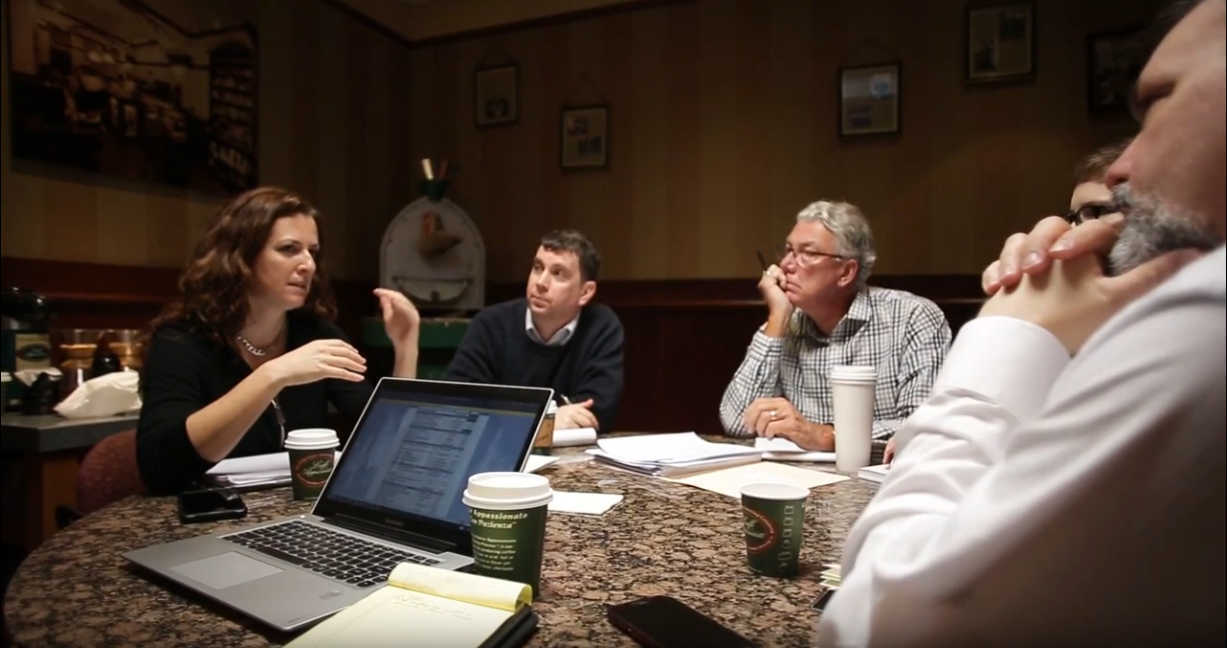
The Freer Consulting team meeting around a conference table

We are a small firm by design. No layers of salespeople, no junior staff learning on your invoice. The consultants who scope your project are the practitioners who deliver it, working on-site or remotely through the Global Virtual Playbook we pioneered for clients across the US and internationally.

We establish long-term, productive relationships with our clients, growing with your company and providing services as you need them. Our experience means we get it right the first time — and our standards ensure your company realizes the benefits of getting it right, again and again.

The same engineering bench that prepares your AMPP/SSPC QP work also supports AISC, API Spec Q1, and ISO 9001 programs — so when your shop carries more than one certification, we keep them aligned on one quality system instead of running disconnected ones.

“I've worked with the Freer Team for over 6 years on our safety, quality, and environmental management system compliance and they've proven time and time again to provide consistent and comprehensive work on all fronts. They are always there when we need them.”
Megan · Hawaii
Talk to a consultant, not a call center

Decoding a spec callout, or starting the road to QP certification?

The fastest answer is a 30-minute call with someone who has sat through these audits. No obligation, and we will tell you plainly where you stand.