Freer Consulting

AISC certification requirements: what your shop needs in place.


AISC certification requirements come down to one sentence: a documented quality management system that meets AISC 207, implemented well enough that your records prove it. Everything else — the manual, the procedures, the audit — is that sentence unpacked.

This page unpacks it: the standard your audit follows, the six areas your system has to cover, and the process from a standing start to a certificate. If you want to know how your shop measures up today, that is a 30-minute conversation, not a research project.

  • 27+ years of industrial compliance and certification consulting.
  • Gap assessments that tell you exactly what is missing, in plain language.
The standard

AISC 207: the standard behind the requirements.

Every AISC certification program, fabricator and erector alike, audits against AISC 207, the Standard for Certification Programs. It is sometimes called the governing requirements, and it defines what your quality management system must address and what the auditor verifies.

Two practical things to know about 207. First, it is a management-system standard, not a fabrication code: it does not replace AWS D1.1 or your project specs, it requires that you have a system controlling how you meet them. Second, it gets revised, and revisions change what auditors look for. The current revision's changes are covered in our breakdown of what changed in AISC 207-2025.

The quality system

The six things your quality system must cover.

The standard's requirements group into six areas. The audit checks all of them, in your documentation and on your floor.

Management responsibility

Someone with authority owns the quality system, quality objectives exist and are reviewed, and management can show it pays attention: management review records, resource decisions, follow-through on problems. Auditors read this area as a proxy for whether the system is real or shelfware.

Document and detailing control

Current drawings and procedures at the point of use, superseded revisions out of circulation, and a controlled path from contract documents through detailing to the floor. Most easy findings live here, because uncontrolled documents are easy to spot.

Material control and traceability

Purchased material verified against requirements, mill test reports retained, and identification maintained so any member traces back to its heat. The system has to work on your real floor, including the drop rack.

Welding control

Welding procedure specifications, procedure qualification records where required, welder qualification records, and conformance to AWS D1.1 as your work demands. For most shops this is the deepest part of the audit, and the area where thin documentation is most expensive.

Inspection and testing

Defined inspection points, qualified people performing them, calibrated equipment, and records of what was inspected and what was found. Outsourced NDT still has to be controlled by your system.

Nonconformance and corrective action

What happens when something fails inspection: documented disposition, and a corrective-action process that addresses causes rather than symptoms. Auditors probe this area hard because it reveals whether the system functions under pressure, not just on paper.

Reading the list, most shops find they already do much of this informally. The gap is rarely capability; it is documentation and consistency. That gap is precisely measurable, and measuring it is what a gap assessment is for.

For what these requirements look like applied to a specific program: fabricator requirements and erector requirements each have their own page.

The process

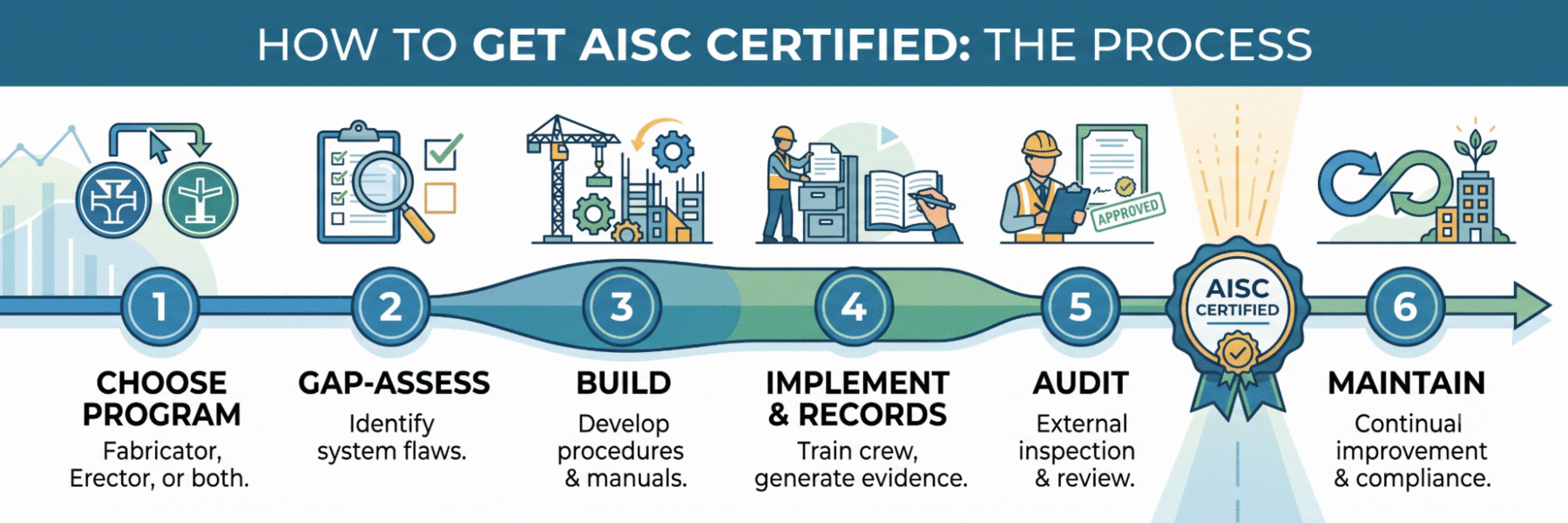
How to get AISC certified: the process.

How to get AISC certified: the six-step process — choose program, gap-assess, build, implement and records, audit, maintain

The sequence is the same at every shop; only the duration varies, and it varies with the gap.

Choose your program

Building or bridge fabricator, erector, component manufacturer, endorsements. The spec language on the work you want drives this choice.

Gap-assess against AISC 207

Compare what your shop does and documents today against the standard. This is where the project gets its real scope and schedule.

Build out the system

Write or revise the quality manual and procedures to close the gaps, matched to how your shop actually works. Oversized systems fail audits as often as undersized ones, just more slowly.

Implement and generate records

Run the system. Train the crew, hold the management reviews, file the inspection reports. The audit needs evidence of a functioning system, which means months of records, not a fresh binder.

Pass the audit

A third-party auditor reviews your documentation and walks your operation. What that day actually looks like is covered in what to expect from the AISC certification audit.

Close findings and maintain

Most audits produce findings; what matters is closing them cleanly. After certification, the system has to keep running, because the audits keep coming.

Shops get stuck at steps 3 and 4, where the work is real and nobody has spare hours. Those are also the steps where experienced help compresses the most calendar time. That is the core of what we do.

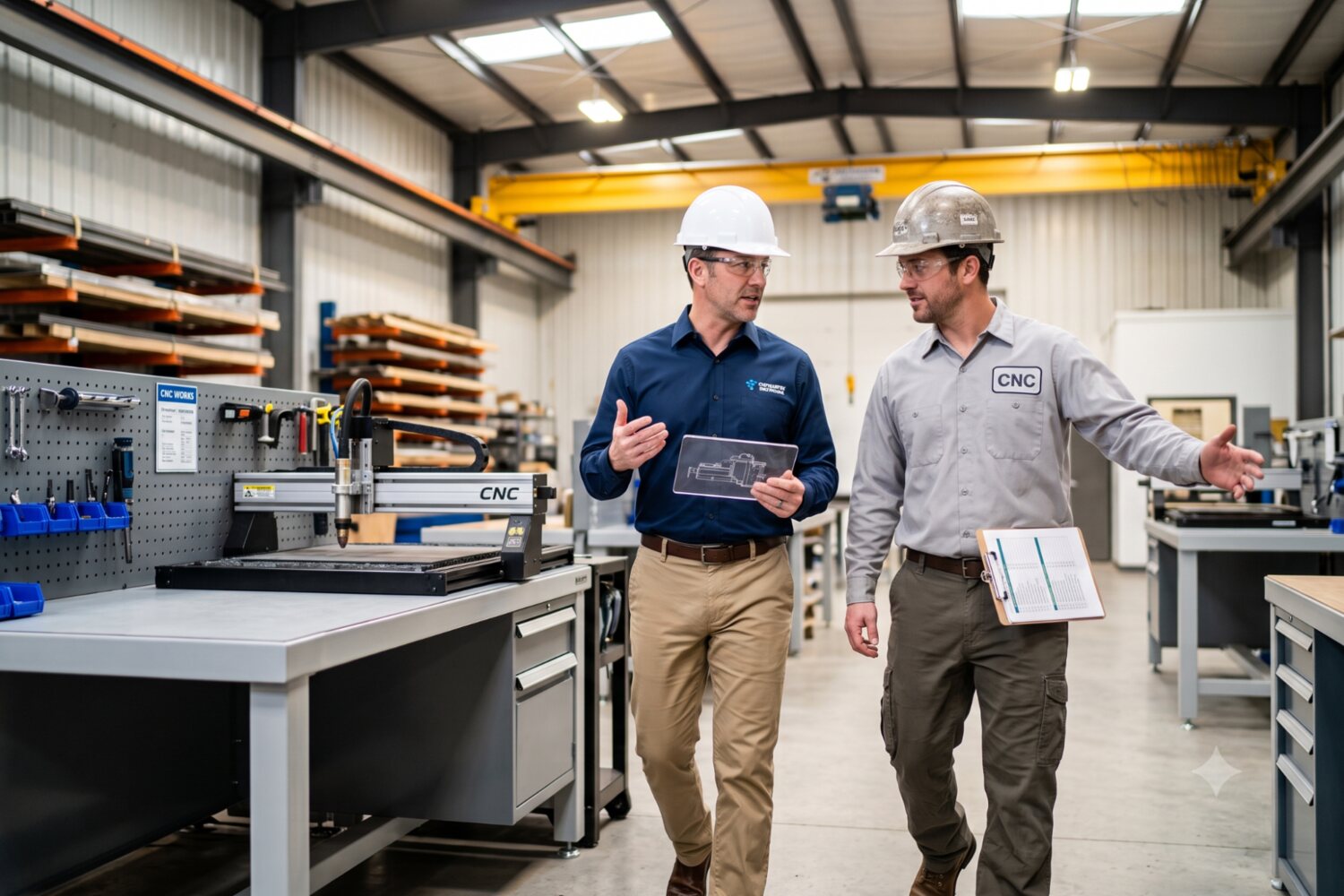
Consultant and shop manager walking the fabrication floor during an AISC certification requirements gap assessment

Requirements are the map; getting a working system built is the work. See how our AISC certification consulting engagements run, or skip to the conversation:

Contact us to get started
FAQ

Requirements, answered.

How long does it take to get AISC certified?

The honest range is wide because the starting points are. The calendar is mostly set by steps 3 and 4: building the system and running it long enough to generate audit evidence. A shop with mature documentation is a different project than a shop starting blank. A gap assessment converts "how long" from a guess into a schedule.

Do we need ISO 9001 before pursuing AISC certification?

No. AISC 207 stands on its own. But the two share quality-system DNA, so a shop with a working ISO 9001 system has a head start, and a shop pursuing both should run one aligned system rather than two. We build them that way from the start.

Who performs the AISC certification audit?

The audit is performed by an independent, third-party auditor who is entirely separate from both the AISC staff and your consulting team. Our role is strictly on your side of the table, helping you build the system and prepare your crew so that audit day comes with zero surprises.

Are the requirements different for fabricators and erectors?

The standard is the same; the disciplines audited differ because the work differs. Fabricator audits live in the shop, erector audits follow the work to the jobsite. Each has its own page: fabricator requirements and erector requirements.

What records will the auditor want to see?

Evidence the system runs: management review minutes, training and qualification records, mill test reports, WPS/PQR and welder quals, inspection reports, calibration records, and corrective-action files. Not piles of paper, but the specific records your own procedures say you keep. If your procedures promise records you do not keep, that is a finding; part of building the system right is promising only what your shop will actually do.

What does meeting the requirements cost?

We have a full breakdown of this over on our dedicated AISC certification cost page. The short version is that your total investment depends entirely on the gap between your current system and the standard, which is exactly why we always recommend starting with a gap assessment.

About Freer Consulting


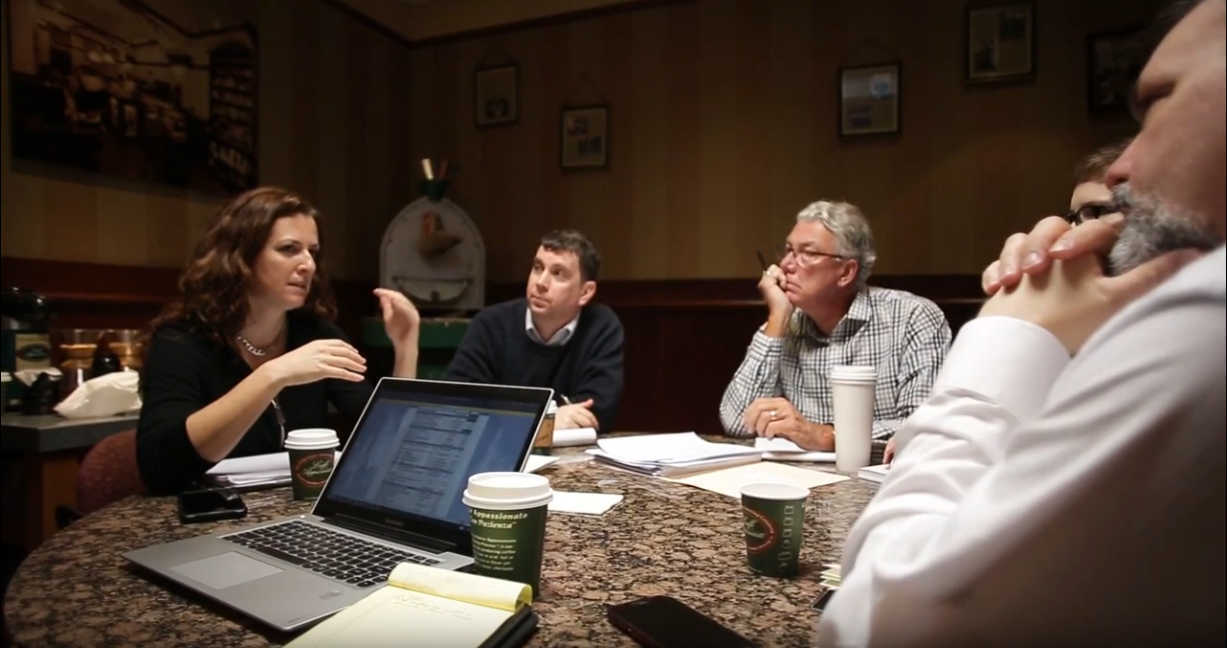
The Freer Consulting team meeting around a conference table

Freer Consulting Co. has 27+ years of experience in a wide range of business consulting fields. Our well-rounded, experienced team has a proven record of meeting business needs and achieving results on-time and within budget. We work with businesses across the United States and internationally, providing both on-site and remote consultation. In our industry, Freer pioneered the Global Virtual Playbook, which allows us to provide expert remote consultation to our clients across the globe.

We establish long-term, productive relationships with our clients. We can grow with your company and provide services as you need them. Our experience means we get it right for your company the first time. Our standards ensure your company realizes the benefits of getting it right, again and again.

The same engineering bench that guides your AISC certification also supports ISO 9001, API Q1, and AMPP/SSPC programs — so when your shop carries more than one certification, we keep them aligned instead of running disconnected systems.

“I've worked with the Freer Team for over 6 years on our safety, quality, and environmental management system compliance and they've proven time and time again to provide consistent and comprehensive work on all fronts. They are always there when we need them.”
Megan · Hawaii
Get a read on where you stand

Want to know exactly where your shop stands?

That is what a gap assessment is for — we'll tell you what's missing between your shop today and a passed audit.