Getting certified
How to become an AISC certified erector, and what it requires.
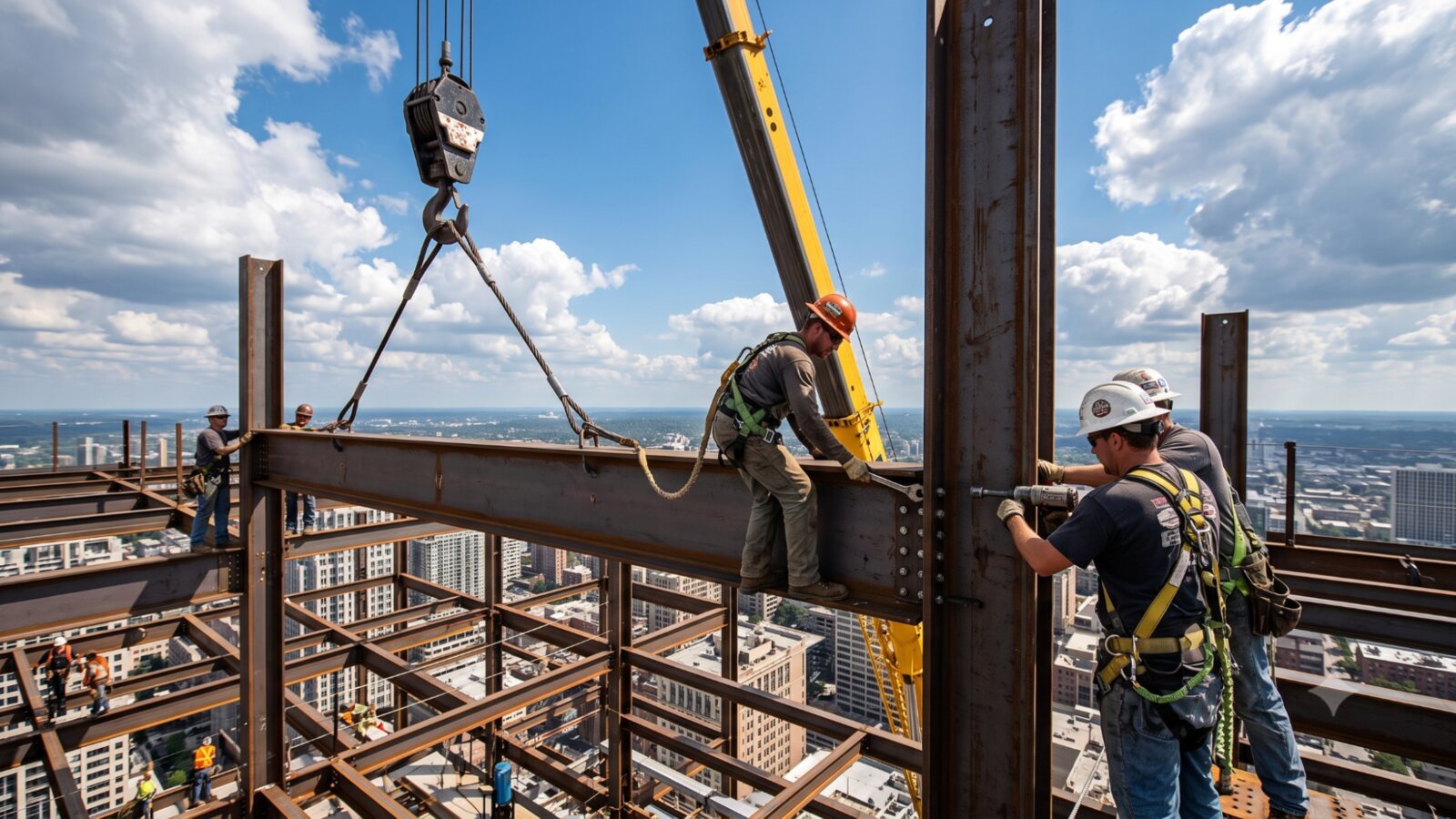
The audit verifies a working management system, not a paper one. For an erector, the disciplines under review are the jobsite's:
- Erection planning and sequencing. Documented pre-job planning: sequence, stability during erection, temporary bracing, and crane and rigging considerations, scaled to the complexity of your work.
- Field welding and bolting. Qualified welding procedures and welders for field conditions, and a bolting program that controls installation and pretensioning methods. Field quality is harder to control than shop quality, and auditors treat it that way.
- Inspection of field connections. Defined inspection responsibilities and records for bolted and welded connections, with a nonconformance process for what inspection finds.
- Crew qualifications and document control. Training and qualification records for the people doing the work, and current drawings and erection plans in the field — not in the trailer under last month's paperwork.
One thing the audit no longer reviews: safety. AISC removed safety requirements from erector certification effective January 1, 2025 — your OSHA and project-level safety obligations are unchanged, but the AISC auditor does not review your safety program. See what the 2025 change means for your certification.
The shape of the path is the same as any AISC program: gap assessment, system build-out, run the system long enough to generate records, then the audit. The clause-level detail of the standard lives on our AISC certification requirements page, and what the effort costs is on the cost page.
The honest difficulty for erectors is that your "shop floor" reassembles itself on every project. Building a system that holds up across changing sites, GCs, and crews is exactly the kind of problem that benefits from someone who has watched it fail and succeed at other contractors. That is the work we do.