Building fabricator
For shops fabricating structural steel for buildings. This is the most common entry point and the category most commercial and institutional specs reference.

AISC certified fabricators are shops whose quality systems have passed a third-party audit against AISC 207, the certification standard for structural steel. General contractors and public owners specify them because the credential removes a question mark: this shop's welding, traceability, and inspection practices have been checked by someone with no stake in the answer.
If you are here because you want your shop to become one, you are in the right place. This page covers the fabricator programs, what the audit requires you to have in place, and how shops get from "we should do this" to a certificate.
AISC certifies fabricators under several program categories, and the first real decision in any certification effort is which one fits the work you do and the work you want to bid.
For shops fabricating structural steel for buildings. This is the most common entry point and the category most commercial and institutional specs reference.
For shops fabricating highway and railroad bridge members. Bridge work carries its own fracture-control and traceability expectations, and most public bridge specs require certification in this category specifically.
For manufacturers of metal components that go into structural systems. The quality-system expectations parallel the building program, scoped to component production.
Certified shops can add endorsements that extend the base certification to specialized work, such as sophisticated paint or fracture-critical endorsements. If a spec on your radar calls one out, the base certification comes first and the endorsement builds on it.
Not sure which category the work you are chasing actually requires? That is a five-minute question for us, and getting it wrong is an expensive way to start. Contact us to get started.
The audit is not a test you cram for. It checks whether your shop runs a documented quality system that meets AISC 207, and whether your records prove you have been running it. For a fabricator, that comes down to five areas:
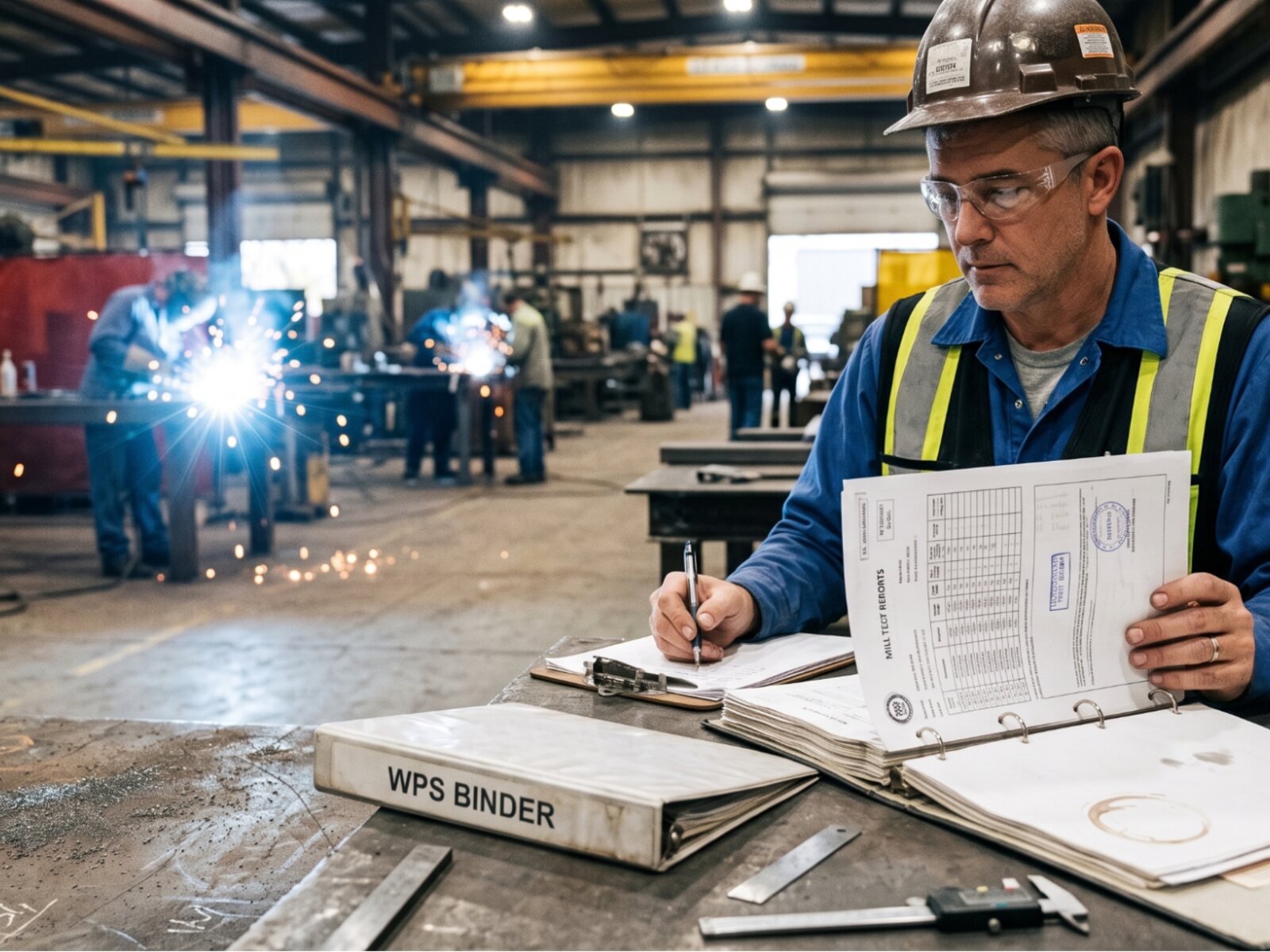
The path itself runs gap assessment, system build-out, a period of running the system to generate real records, then the audit. The clause-by-clause picture of the standard lives on our AISC certification requirements page, and what the effort costs — in fees and in your people's time — is on the cost page.
Where shops stall is the middle: the manual gets written, then sits, because everyone has a day job. That is the part we are built for. We do the documentation lifting, train your team on the system, and keep the project moving while your shop keeps shipping steel.
Fabricator certification is one path through a larger discipline. For the full picture of how we take shops through it, see our AISC certification consulting services.
Contact us to get startedIf you came here to check whether a shop is certified, AISC publishes the authoritative listing of certified companies on aisc.org, searchable by name, location, and program. A current listing there outranks any logo or certificate a shop shows you.
And if what you actually want is your own shop on that list, that is the work we do. Keep reading:
The most current and authoritative source is the certified-company directory directly on aisc.org. If you are a fabricator looking to get your own shop onto that list, the rest of this page is designed for you.
It mostly depends on your starting point. A shop that already has documented procedures and solid record-keeping is months ahead of a shop starting entirely from scratch. Because the actual audit requires proof that your quality system has been running consistently over time, rather than just a brand-new binder on a shelf, a quick scoping call is the best way to get a realistic timeline tailored to your specific operation.
You need welders qualified to your welding procedure specifications, with qualification records to show it, and a welding program consistent with AWS D1.1 as your work requires. If your welding documentation is thin, expect that to be the longest workstream.
Yes, and small shops sometimes have the easier audit: fewer handoffs, shorter lines of communication, and a system that can be right-sized instead of bureaucratic. The standard scales to your operation. What a small shop usually lacks is spare hands for the documentation push, which is precisely the part you can hire out.
There is no flat number; AISC program fees, your internal hours, and any outside help all scale with the gap between your current system and the standard. We break the drivers down on the AISC certification cost page, and we scope real estimates by phone.
Freer Consulting Co. has 27+ years of experience in a wide range of business consulting fields. Our well-rounded, experienced team has a proven record of meeting business needs and achieving results on-time and within budget. We work with businesses across the United States and internationally, providing both on-site and remote consultation. In our industry, Freer pioneered the Global Virtual Playbook, which allows us to provide expert remote consultation to our clients across the globe.
We establish long-term, productive relationships with our clients. We can grow with your company and provide services as you need them. Our experience means we get it right for your company the first time. Our standards ensure your company realizes the benefits of getting it right, again and again.
The same engineering bench that guides your AISC certification also supports ISO 9001, API Q1, and AMPP/SSPC programs — so when your shop carries more than one certification, we keep them aligned instead of running disconnected systems.
“I've worked with the Freer Team for over 6 years on our safety, quality, and environmental management system compliance and they've proven time and time again to provide consistent and comprehensive work on all fronts. They are always there when we need them.”
A free 30-minute call and we'll map the path from where your shop is today to a passed fabricator audit.