Artificial intelligence is receiving intense attention, and many organizations are feeling pressure to begin using it. Vendors, consultants, and media coverage often present AI as a near-term solution to a wide range of operational problems. At the same time, many organizations are struggling to translate that attention into consistent, practical results.
The challenge is not a lack of interest or effort. It is a mismatch between how AI is marketed and how organizations actually operate. AI is often approached as a software tool that can be deployed quickly, when in reality it behaves more like an operational system that depends on existing processes, data quality, and organizational discipline.
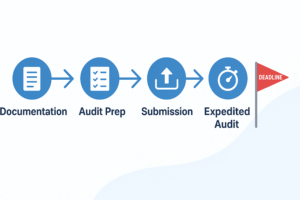
A more useful way to think about AI adoption is to compare it to preparing for certification.
AI Doesn’t Fix Broken Processes
AI does not correct underlying inefficiencies. It automates whatever already exists.
When workflows are unclear, inconsistent, or poorly defined, AI will simply execute those problems faster. Instead of improving efficiency, organizations end up with accelerated errors, inconsistent outputs, and frustrated teams.
Process mapping is the corrective step. By documenting how work flows through the organization—who does what, when decisions are made, and where handoffs occur—inefficiencies become visible. Redundant steps, bottlenecks, and gaps that were previously tolerated or unnoticed are exposed.
This is the same reason certification efforts begin with documented processes. You cannot control or improve what you have not clearly defined.
Why Process Mapping Comes First
Process mapping provides a shared, objective view of operations. It moves discussions from assumptions to evidence.
When processes are mapped:
- Teams gain clarity on responsibilities and dependencies
- Data inputs and outputs are clearly identified
- Variability and inconsistency become measurable
- Opportunities for improvement can be evaluated realistically
Without this foundation, AI initiatives are based on guesswork. Organizations are forced to retrofit tools around unclear workflows, often leading to rework and abandonment.
Targeted AI Application Saves Time and Money
Not every task should be automated. One of the most valuable outcomes of process mapping is the ability to distinguish where AI adds value and where human judgment should remain primary.
AI is well suited for:
- Repetitive tasks
- Data-heavy activities
- Pattern recognition and summarization
- Scheduling, classification, and drafting
AI is less effective where:
- Context and judgment are critical
- Accountability cannot be automated
- Regulatory or safety risks are high
Process mapping allows organizations to target AI use deliberately, rather than applying it broadly. This prevents unnecessary tooling, reduces cost, and avoids overengineering solutions that do not improve outcomes.
The Certification Parallel
Certification frameworks offer a useful model for AI readiness.
Certification requires:
- Defined scope
- Documented processes
- Assigned responsibilities
- Internal review before external validation
AI adoption benefits from the same discipline. When organizations treat AI as an operational system—rather than a shortcut—they are better positioned to implement it effectively and sustainably.
Skipping this foundation leads to the same result in both cases: failed audits, failed implementations, and wasted effort.
What This Looks Like in Practice
A mid-sized industrial services firm came into an AI initiative with a clear goal: reduce time spent compiling project summaries and internal reports. Early tests showed inconsistent results. Some outputs were useful, others were incomplete or misleading, and staff quickly lost confidence in the tool.
Rather than abandoning the effort, the organization stepped back and mapped the underlying workflow. They documented how information was created, who owned it, where it was reviewed, and which inputs were reliable versus informal. This process revealed that the reporting task itself was compensating for upstream gaps in how data was collected and approved.
Once those gaps were addressed, AI was reintroduced in a limited, well-defined role: summarizing standardized inputs after human review, not replacing judgment or accountability. The result was a measurable reduction in administrative effort and far more consistent outputs. The AI did not change what the organization did—it reinforced how it already worked when the process was clear.
A Practical Path Forward
AI adoption does not require choosing between caution and progress. The most successful organizations treat AI the same way they treat any operational system: define the scope, establish control, and introduce it deliberately.
Organizations that take this approach are able to move faster, not slower. They spend less time experimenting blindly and more time applying AI where it supports real work. Preparation and implementation become part of the same effort, grounded in how the business actually operates.
Organizations that start by mapping and understanding their processes are able to:
- Fix inefficiencies before automating them
- Apply AI where it produces measurable value
- Maintain control, accountability, and trust
- Reduce the risk of failed initiatives
Preparing for AI is not fundamentally different from preparing for certification. Both succeed when structure, documentation, and alignment come first.
For organizations evaluating AI, the most practical first step is not selecting tools- it is understanding how the business actually works.
Getting Started
Adopting AI doesn’t have to mean guessing, rushing, or reworking failed pilots.
If your organization is exploring AI and wants to apply it in a way that aligns with real operations, accountability, and long-term results, we can help you assess readiness, clarify processes, and implement AI where it makes sense.
Contact us to learn more about taking a structured approach to AI